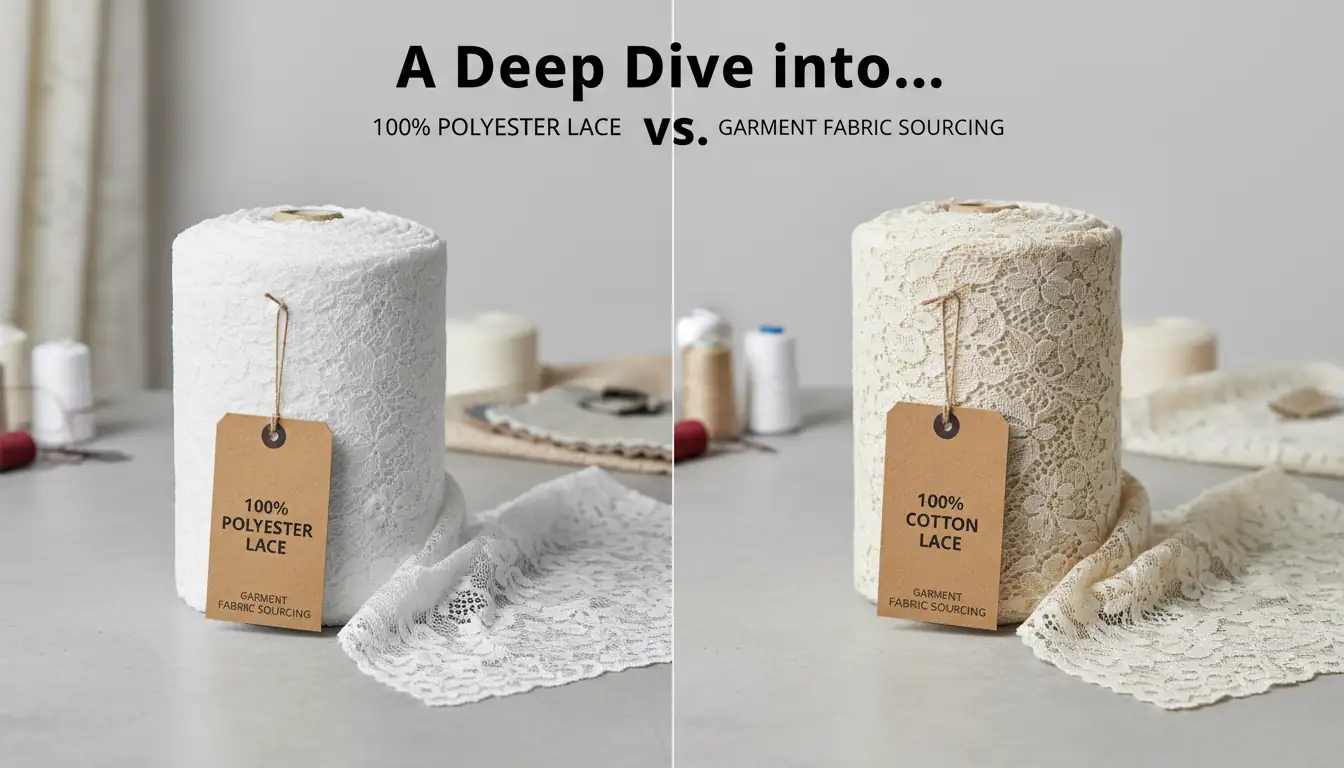
Garment Fabric Sourcing: A Deep Dive into 100% Polyester vs. Cotton Lace
In the competitive landscape of garment manufacturing, understanding the nuances of fabric sourcing is critical. This analysis focuses on **100% polyester lace** versus **cotton lace**, two predominant choices in the textile industry. Key differentiators include **tensile strength**, **moisture absorption**, and **production costs**. By evaluating these parameters, procurement managers can make informed decisions to optimize supply chain efficiency and product quality.
Production Techniques
The production of lace fabric involves intricate techniques that vary significantly between polyester and cotton. Polyester lace is typically produced through warp knitting or weaving processes, leveraging high-speed machinery for mass production. Conversely, cotton lace often utilizes traditional methods, which may involve handcrafting or specialized looms that allow for detailed patterns.
Machinery Used
- Polyester Lace: High-speed warp knitting machines (e.g., Karl Mayer) designed for rapid output.
- Cotton Lace: Jacquard looms and embroidery machines for detailed designs.
Raw Material Grades
When sourcing lace fabric, the quality of raw materials plays a pivotal role. Polyester is known for its durability and resilience, while cotton offers superior breathability and comfort.
Technical Specifications
- Polyester Fabric: High tensile strength, low moisture absorption.
- Cotton Fabric: Moderate tensile strength, high moisture absorption.
Quality Control Standards
Quality assurance is essential in textile production. Both polyester and cotton laces must meet industry standards, such as ISO certifications and AATCC testing for colorfastness and durability.
| Specification | 100% Polyester Lace | Cotton Lace |
|---|---|---|
| GSM (grams per square meter) | 80-120 | 60-100 |
| Composition | 100% Polyester | 100% Cotton |
| Width | 150-300 cm | 100-150 cm |
Cost Implications
Cost is a significant factor in fabric sourcing. Generally, polyester lace is less expensive due to lower production costs and higher availability. In contrast, cotton lace may incur higher expenses due to the labor-intensive processes involved in its production.
Lead Times and Minimum Order Quantities (MOQ)
- Polyester Lace: Shorter lead times, MOQs often starting from 500 meters.
- Cotton Lace: Longer lead times, higher MOQs may apply due to specialized manufacturing.
Environmental Considerations
In today's eco-conscious market, sustainability is paramount. Cotton, being a natural fiber, is biodegradable, whereas polyester is derived from petroleum-based resources, raising concerns regarding environmental impact. However, advancements in recycling technologies for polyester are gaining traction.
Compliance and Certification
When sourcing lace fabrics, compliance with standards such as OEKO-TEX Standard 100 is crucial. This certification ensures that fabrics are free from harmful substances, adding value to the procurement process.
FAQs
What is the typical lead time for lace fabric samples?
Sample lead times for polyester lace are usually 7-10 days, while cotton lace may take 10-14 days due to longer production processes.
What is the minimum order quantity (MOQ) for lace fabrics?
MOQs for polyester lace can start from 500 meters, while cotton lace typically requires a minimum of 1,000 meters due to production constraints.
How do I ensure quality in my lace fabric sourcing?
Partner with a reputable lace fabric manufacturer, like Shaoxing Yituo, and ensure compliance with ISO and AATCC standards.
What are the key differences in maintenance for polyester vs. cotton lace?
Polyester lace is generally easier to maintain, being resistant to wrinkles and shrinking, while cotton lace may require more careful washing to maintain its integrity.
Are there sustainable options available for lace fabrics?
Yes, recycled polyester options are available, and organic cotton is a sustainable alternative for cotton lace.
Conclusion
In conclusion, both **100% polyester lace** and **cotton lace** offer distinct advantages and challenges for garment fabric sourcing. Understanding their specifications, production processes, and cost implications is essential for procurement managers aiming to enhance supply chain efficiency. For high-quality lace fabric solutions, consider reaching out to Shaoxing Yituo for a free sample swatch and expert guidance tailored to your sourcing needs.