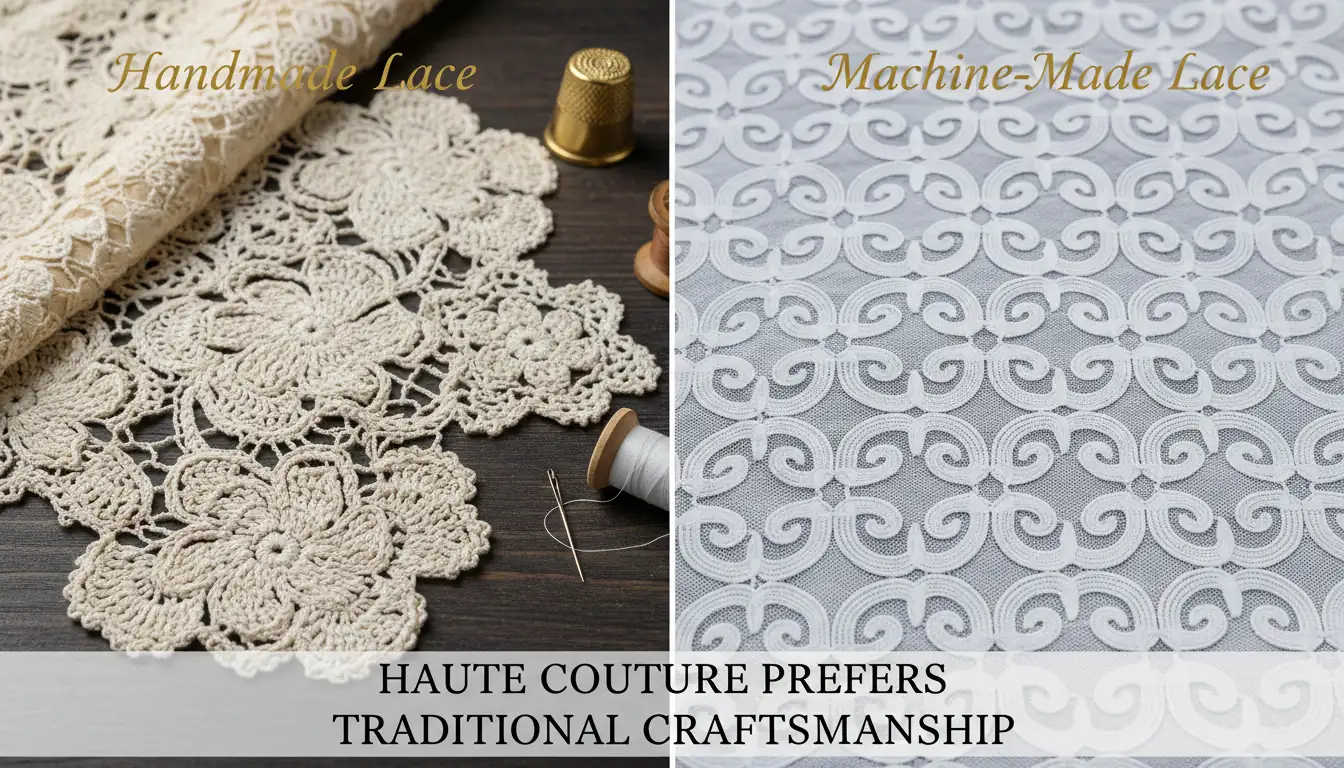
Handmade vs. Machine-Made Lace: Why Haute Couture Prefers Traditional Craftsmanship
In the world of haute couture, the choice between handmade lace and machine-made lace has significant implications for both design integrity and supply chain dynamics. While machine lace making offers efficiencies in production, handmade lace is often favored for its unique aesthetic and intricate craftsmanship. This article will explore the critical factors influencing the preference for traditional craftsmanship in high-end fashion.
Production Techniques: A Comparative Overview
Handmade Lace
Handmade lace is produced through traditional artisanal methods, often involving intricate techniques that require skilled craftsmanship. The production process includes:
- Hand-crocheting or hand-embroidering each piece.
- Utilizing high-quality natural fibers such as silk or cotton, ensuring superior texture and durability.
- Time-consuming practices that can take days or even weeks to complete a single piece.
Machine-Made Lace
Machine-made lace utilizes automated machinery to produce lace fabrics at a larger scale. Key aspects include:
- Use of synthetic fibers, which can lower production costs.
- Speedy production times, often yielding thousands of yards in days.
- Consistency in design and uniformity in production.
Raw Material Grades and Quality Control Standards
The choice of raw materials plays a pivotal role in determining the quality of lace. Handmade lace typically employs premium materials, while machine-made lace may utilize lower-grade synthetics. Quality control standards are crucial in both cases:
- Handmade Lace: Often meets stringent quality standards such as OEKO-TEX Standard 100 for fabric safety.
- Machine-Made Lace: Must adhere to industrial standards like ISO and AATCC for consistency and performance metrics.
Statistical Overview: Technical Specifications Comparison
| Specification | Handmade Lace | Machine-Made Lace |
|---|---|---|
| GSM (grams per square meter) | 150-300 | 100-250 |
| Composition | Silk, Cotton, Linen | Polyester, Nylon, Blends |
| Width | 60-120 cm | 90-150 cm |
Benefits of Handmade Lace in Haute Couture
Haute couture brands prefer handmade lace for several reasons:
- Uniqueness: Each piece of handmade lace is distinct, adding exclusivity to couture collections.
- Artisan Skills: The intricate details and craftsmanship reflect the skills of artisans, elevating the brand's prestige.
- Historical Value: Handmade lace carries a tradition that resonates with the luxury market's desire for heritage and authenticity.
Conclusion: The Supply Chain Impact
While both types of lace have their place in the market, the preference for handmade lace within haute couture highlights a significant trend in the textile supply chain. The focus on quality, uniqueness, and artisan craftsmanship not only enhances product value but also aligns with the growing consumer demand for sustainable and ethically produced goods.
FAQ
What is the MOQ for handmade lace?
The Minimum Order Quantity (MOQ) for handmade lace typically ranges from 10-50 meters, depending on the manufacturer.
What is the sample lead time for lace?
Sample lead time usually varies between 2-4 weeks for handmade lace, while machine-made lace samples can be produced within 1-2 weeks.
Can I get a wholesale price for machine-made lace?
Yes, many lace fabric manufacturers offer competitive wholesale pricing for machine-made lace based on volume.
How does lace fabric affect garment pricing?
The choice of lace significantly influences garment pricing, with handmade lace typically commanding higher prices due to its labor-intensive production.
What is the lifespan of lace fabrics?
The lifespan of lace fabrics varies; handmade lace can last decades if cared for properly, while machine-made lace may have a shorter lifespan depending on the material quality.
To explore our premium offerings, including luxury lace fabric for couture dresses, or to request a free sample swatch from Shaoxing Yituo, please contact us today.