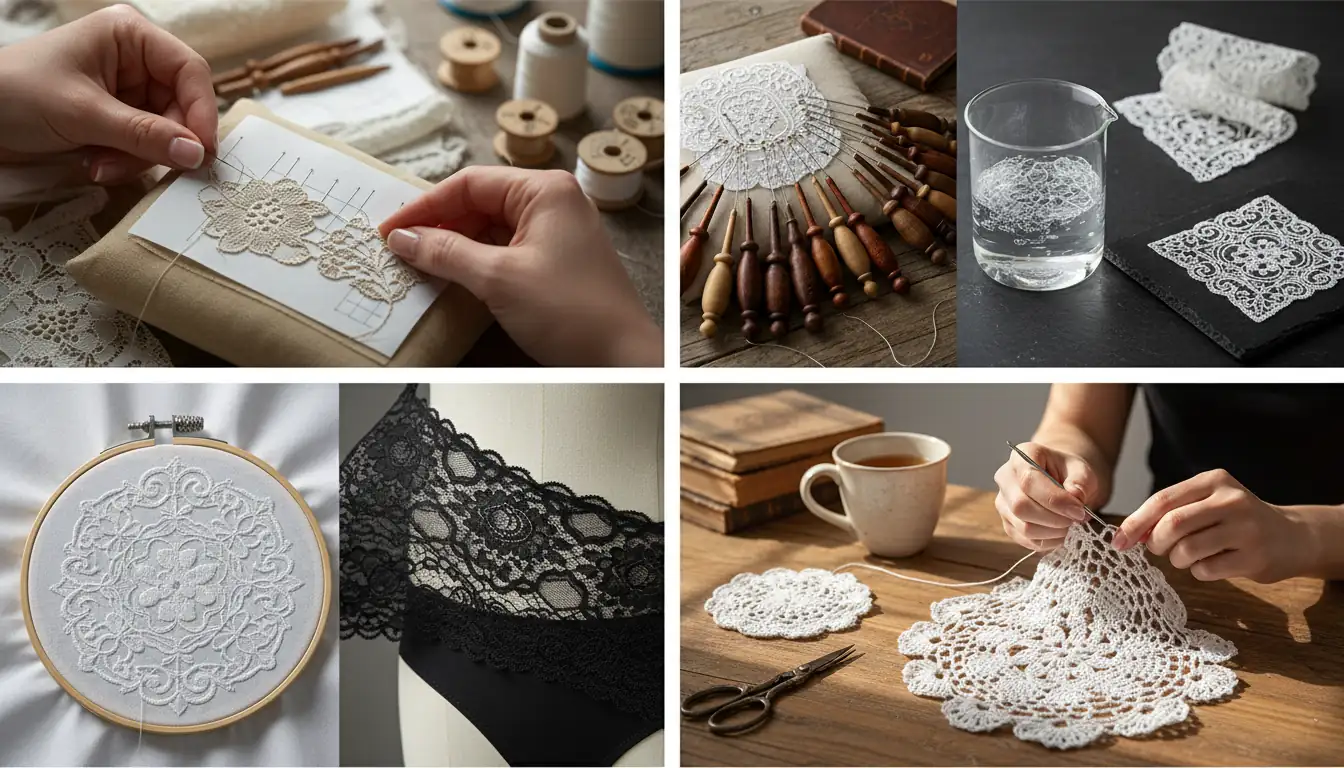
How Lace Fabric Is Produced
Lace fabric is a delicate textile characterized by intricate patterns, typically made from threads of cotton, silk, or synthetic fibers. Understanding how lace is produced is crucial for procurement managers and factory heads in the global textile supply chain. In summary, lace production involves various techniques, including **embroidering**, **weaving**, and **knitting**, utilizing specialized machinery and high-quality raw materials. The choice of production method impacts the **minimum order quantity (MOQ)**, **lead time**, and **quality control (QC)** standards of the final product.
Production Techniques for Lace Fabric
1. Weaving
Weaving is one of the most traditional methods of producing lace fabric. It involves the interlacing of threads on a loom. This technique is used primarily in the production of **guipure lace fabric**, which features a heavier, more structured design.
2. Embroidery
Embroidery is another popular method, particularly for **embroidered lace fabric**. This technique uses stitching on a base fabric to create decorative patterns. The embroidery process can be automated or done by hand, depending on the complexity of the design.
3. Knitting
Knitting is often employed for producing stretchable lace fabrics. This method allows for versatility in design and is commonly used in lace trims.
Machinery Used in Lace Production
The production of lace fabric requires specialized machinery, including:
- Jacquard Looms for complex woven patterns
- Embroidery Machines for precise stitching
- Knitting Machines for elastic lace
Raw Material Grades for Lace Fabric
The quality of lace fabric is significantly influenced by the selection of raw materials. Common materials include:
- Cotton: Offers breathability and comfort
- Silk: Provides a luxurious finish
- Synthetic Fibers: Enhance durability and reduce costs
Quality Control Standards
Quality control is paramount in lace fabric production. Standards such as **OEKO-TEX Standard 100** ensure that fabrics are tested for harmful substances, while ISO standards provide guidelines for quality management processes. Key QC parameters include:
- Tensile Strength
- Color Fastness
- Dimensional Stability
Comparison of Lace Fabric Technical Specifications
| Type of Lace Fabric | GSM | Composition | Width |
|---|---|---|---|
| Guipure Lace | 80-150 | Cotton/Silk Blend | 130-150 cm |
| Embroidered Lace | 60-120 | Polyester/Cotton | 110-140 cm |
| Lace Trim | 40-100 | Polyester | 2-10 cm |
Frequently Asked Questions (FAQ)
What is the average lead time for lace fabric production?
The average lead time for lace fabric varies based on the production method and order size, typically ranging from 4 to 12 weeks.
What is the minimum order quantity (MOQ) for lace fabric?
The MOQ for lace fabric generally starts at 500 meters, depending on the manufacturer and fabric type.
Can I request a sample swatch of lace fabric?
Yes, most lace fabric manufacturers offer sample swatches upon request to ensure quality and color match.
What certifications should I look for in lace fabric?
Look for certifications like **OEKO-TEX Standard 100** and ISO standards for safety and quality assurance.
What types of lace fabrics are available?
Common types include **guipure lace fabric**, **embroidered lace fabric**, and various lace trims, each serving different applications.
For more detailed information on lace fabric types, check out our articles on What Is Lace Fabric, How Lace Fabric Is Made, and What Is Embroidered Lace Fabric.
To enhance your supply chain with quality lace materials, request a free sample swatch from Shaoxing Yituo today.