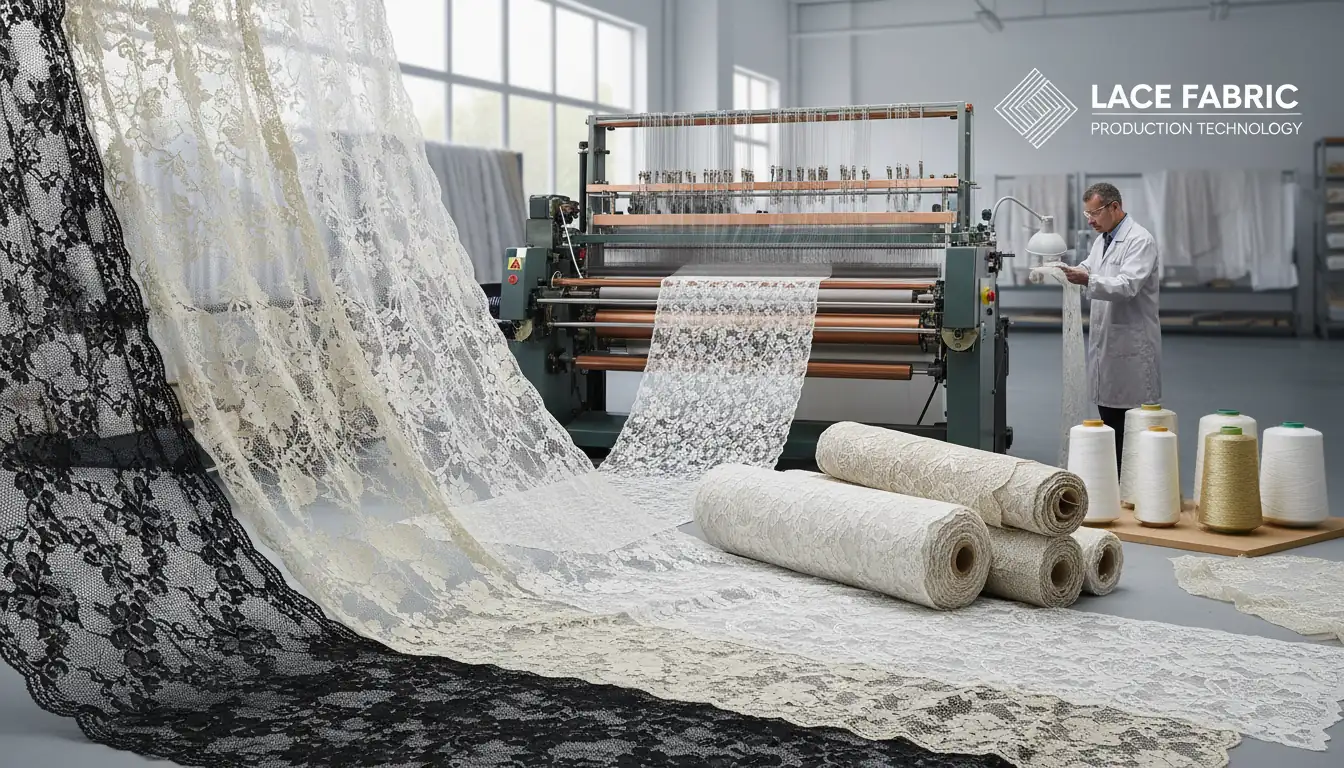
Lace Fabric Production Technology
Understanding the intricacies of lace fabric production is essential for procurement managers and factory heads in the textile industry. Lace fabric, known for its intricate patterns and delicate structure, requires specific production technologies and standards to ensure quality and compliance. **Key production techniques** include weaving, knitting, and embroidery, each demanding precision machinery and skilled labor. Furthermore, maintaining strict **quality control (QC)** standards, such as **OEKO-TEX Standard 100**, is crucial for ensuring fabric safety and sustainability in the supply chain.
Production Techniques
1. Weaving Techniques
Lace production primarily utilizes the weaving technique, especially for styles like guipure lace fabric. This method interlaces threads to create various patterns and textures.
- Jacquard Weaving: Allows for complex designs with high precision.
- Plain Weave: Basic method used for simpler lace styles.
2. Knitting Techniques
Knitted lace fabrics offer elasticity and comfort, making them suitable for various applications. This technique is commonly used in the production of embroidered lace fabric.
- Warp Knitting: Produces strong, durable lace.
- Weft Knitting: Offers flexibility and softness.
3. Embroidery Techniques
Embroidery enhances lace fabric's aesthetic appeal, adding intricate designs. It can be applied to both woven and knitted bases.
- Machine Embroidery: Increases production efficiency.
- Hand Embroidery: Provides unique, artisanal characteristics.
Machinery Used in Lace Fabric Production
The machinery involved in lace production varies based on the technique employed. A few essential machines include:
- Jacquard Looms: Necessary for intricate patterns.
- Knitting Machines: Used for creating lace textures.
- Embroidery Machines: For adding detailed designs onto the fabric.
Raw Material Grades
The quality of lace fabric largely depends on the raw materials used. Common materials include:
- Polyester: Cost-effective and versatile.
- Nylon: Known for its strength and durability.
- Cotton: Offers breathability and comfort.
Quality Control Standards
Quality control is vital in lace fabric production to meet international standards and client expectations. Key QC aspects include:
- Tensile Strength: Ensures the fabric can withstand stress.
- GSM (Grams per Square Meter): Determines fabric weight and thickness.
- Colorfastness: Tests the fabric's resistance to fading.
Comparison of Lace Fabric Specifications
| Type of Lace Fabric | Composition | GSM | Width |
|---|---|---|---|
| Guipure Lace Fabric | Polyester/Cotton | 70-120 | 130-150 cm |
| Embroidered Lace Fabric | Polyester/Nylon | 80-140 | 130-160 cm |
FAQ
What is the typical lead time for lace fabric production?
Lead time generally ranges from 4 to 8 weeks, depending on order volume and production complexity.
What is the minimum order quantity (MOQ) for lace fabric?
The MOQ varies by supplier; however, it typically starts at 500 meters for wholesale orders.
How does Shaoxing Yituo ensure quality in lace fabric?
Shaoxing Yituo implements rigorous QC measures, including testing for tensile strength and adhering to OEKO-TEX Standard 100.
Can I customize lace patterns?
Yes, customization is available, but it may affect lead times and MOQs.
What are the advantages of sourcing lace fabric from Shaoxing Yituo?
Shaoxing Yituo offers competitive pricing, a wide range of fabric types, and strict adherence to international quality standards.
For procurement managers and fabric product developers looking for high-quality lace, consider sourcing from Shaoxing Yituo. Request a Free Sample Swatch today to experience our premium lace fabric firsthand. Explore more about what lace fabric is, how lace fabric is made, and what embroidered lace fabric entails for comprehensive insights into your sourcing decisions.