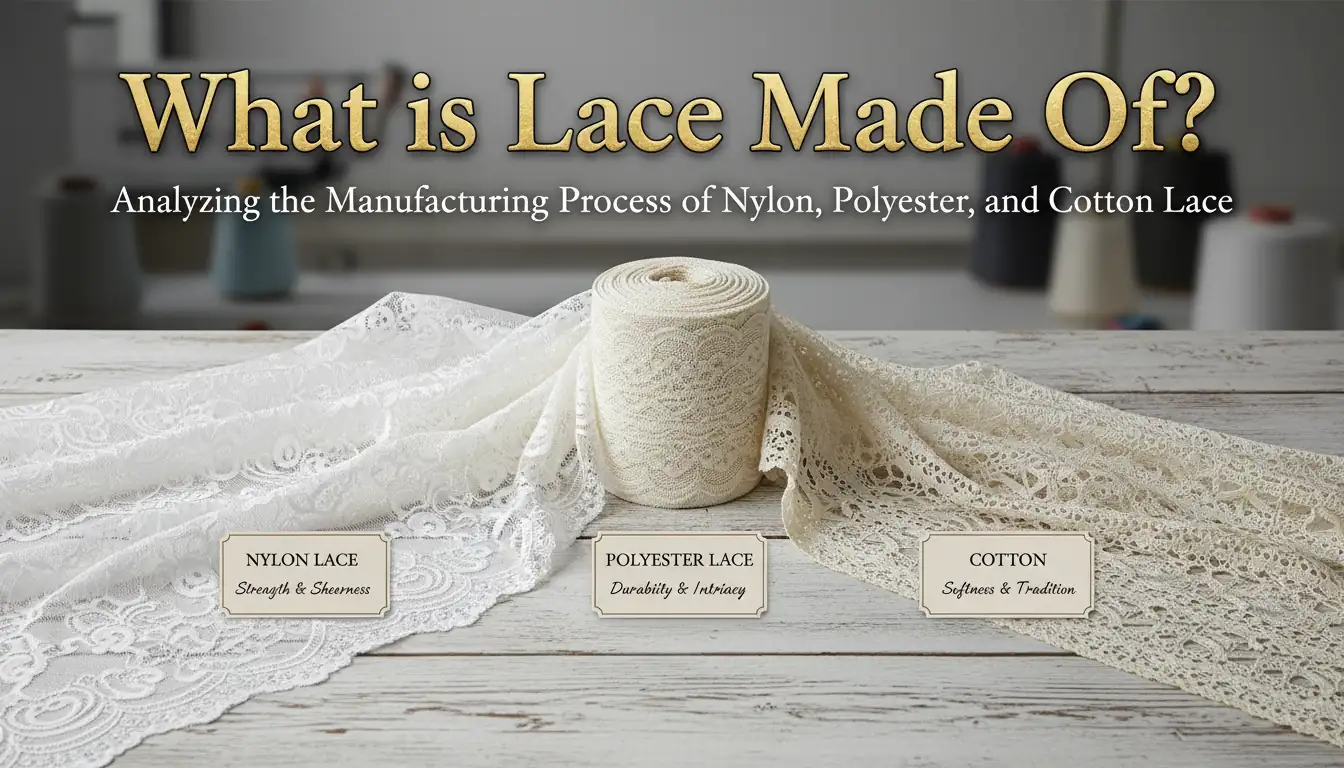
What is Lace Made Of? Analyzing the Manufacturing Process of Nylon, Polyester, and Cotton Lace
Understanding the composition and manufacturing process of lace is essential for procurement managers and fabric developers in the apparel industry. Lace can be made from various materials, primarily including nylon, polyester, and cotton. The choice of material significantly affects the lace's texture, durability, and application in garment production. The manufacturing process varies by material, influencing factors such as lead time, minimum order quantity (MOQ), and quality control standards.
1. Overview of Lace Materials
1.1 Nylon Lace
Nylon lace is known for its elasticity and strength. It is often used in evening wear and lingerie due to its fine texture and ability to hold intricate patterns.
1.2 Polyester Lace
Polyester lace is widely recognized for its durability and resistance to wrinkling. It is a cost-effective alternative to nylon and is frequently used in a variety of apparel items.
1.3 Cotton Lace
Cotton lace offers a soft, breathable option, making it suitable for summer garments and casual wear. Its natural fibers allow for easier dyeing and a more comfortable fit.
2. Manufacturing Processes
2.1 Raw Material Preparation
The production of lace begins with the selection of raw materials. The quality of nylon, polyester, and cotton fibers directly impacts the final product. Key specifications include:
- Fiber Grade: Higher-grade fibers yield superior lace.
- Denier Count: Determines the thickness of the lace.
- Yarn Type: Filament vs. spun yarn affects texture.
2.2 Weaving Techniques
Lace can be produced using various weaving techniques, including:
- Jacquard Weaving: Allows for complex patterns.
- Leavers Lace: A traditional method producing high-quality lace.
- Schiffli Embroidery: Combines embroidery with lace-making.
2.3 Quality Control Standards
Quality control is crucial in lace production. The following standards are often applied:
- OEKO-TEX Standard 100: Ensures textiles are free from harmful substances.
- AATCC Test Methods: Evaluate colorfastness and fabric performance.
3. Technical Specifications Comparison
| Material | Composition | GSM | Width |
|---|---|---|---|
| Nylon Lace | 100% Nylon | 30-50 GSM | 50-130 cm |
| Polyester Lace | 100% Polyester | 50-80 GSM | 110-150 cm |
| Cotton Lace | 100% Cotton | 60-90 GSM | 50-120 cm |
4. Frequently Asked Questions
4.1 What is the average lead time for lace production?
The average lead time for lace production typically ranges from 4 to 8 weeks, depending on the complexity of the design and the chosen material.
4.2 What is the minimum order quantity (MOQ) for custom lace?
The MOQ for custom lace orders generally ranges from 500 to 1,000 meters, depending on the manufacturer and design specifications.
4.3 How can I ensure the quality of lace products?
To ensure quality, request samples and verify compliance with international standards such as OEKO-TEX Standard 100.
4.4 What are the differences between nylon lace and polyester lace?
Nylon lace is more elastic and finer, while polyester lace offers greater durability and cost-effectiveness. For a detailed comparison, visit Nylon Lace vs Polyester Lace.
4.5 Where can I learn more about lace fabric manufacturing processes?
For a comprehensive overview, refer to our resource on the Lace Fabric Manufacturing Process.
5. Conclusion
Understanding the materials and processes behind lace production is crucial for making informed procurement decisions. Whether you are sourcing cotton lace, nylon lace, or polyester lace, knowledge of technical specifications and manufacturing standards can significantly impact your supply chain efficiency.
For high-quality lace options tailored to your specifications, request a free sample swatch from Shaoxing Yituo today!