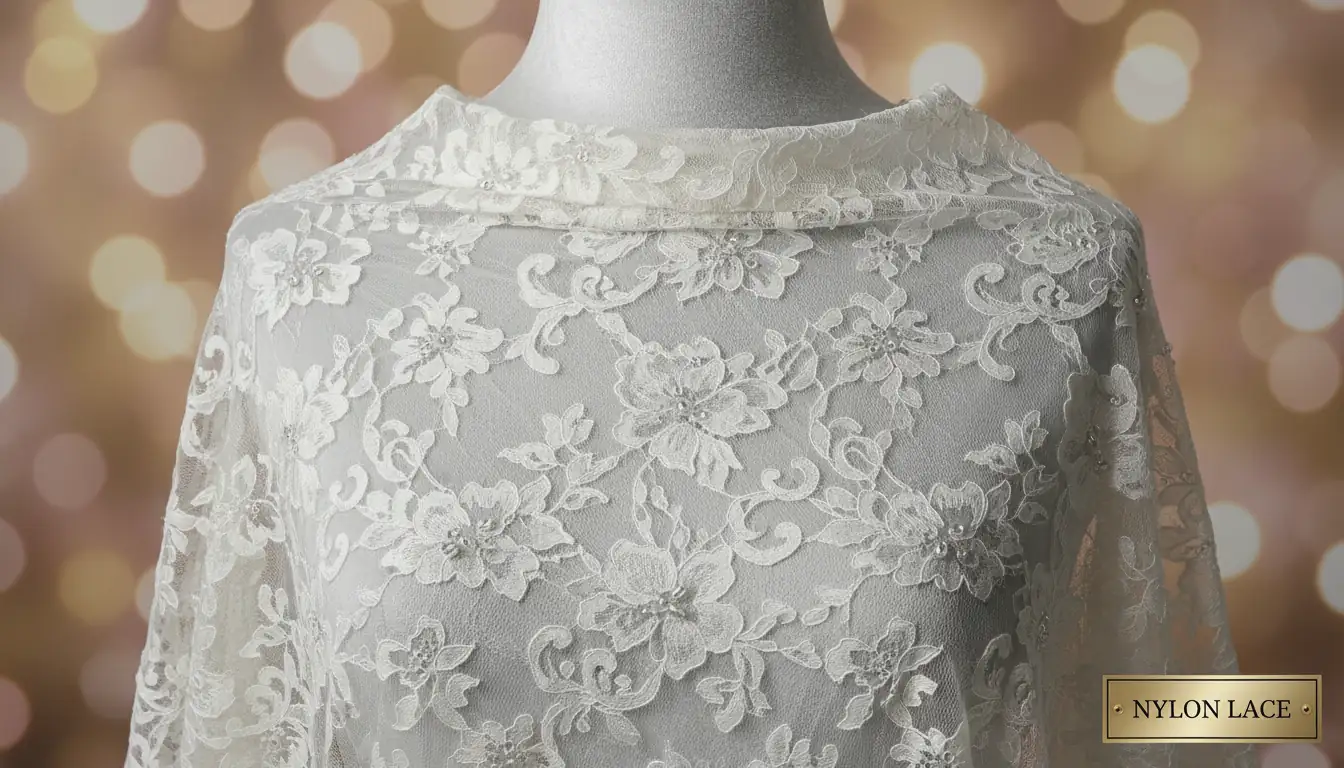
Nylon Lace vs Polyester Lace
In the competitive landscape of textile manufacturing, understanding the differences between nylon lace and polyester lace is crucial for procurement managers and fabric product developers. Both materials are integral to various applications, but they offer distinct properties that can influence production decisions. This article will provide a detailed comparison of these two lace fabrics, focusing on production techniques, raw material grades, and quality control standards.
Production Techniques
The manufacturing processes for nylon and polyester lace involve intricate techniques that require specialized machinery:
- Nylon Lace: Typically produced using warp knitting or embroidery techniques, nylon lace is created from polyamide fibers. The production involves high-speed knitting machines capable of achieving fine, intricate patterns.
- Polyester Lace: Often made using similar knitting technologies, polyester lace can also be produced through weaving techniques. The versatility of polyester allows for a wider range of textures and patterns.
Raw Material Grades
The choice of raw materials significantly impacts the quality and performance of lace fabrics:
- Nylon: High tenacity nylon is commonly used, providing superior strength and elasticity. This material is resistant to abrasion and has excellent tensile strength.
- Polyester: Most polyester lace utilizes recycled PET or virgin polyester, offering durability and resistance to shrinkage. It is also less prone to fading when exposed to UV light.
Quality Control Standards
To ensure that lace fabrics meet industry standards, strict quality control measures are implemented:
- ISO Standards: Both nylon and polyester lace production should adhere to ISO 9001 for quality management systems.
- AATCC Testing: Fabrics are often subjected to AATCC testing for colorfastness and durability, especially when used in apparel applications.
Comparative Technical Specs
| Specification | Nylon Lace | Polyester Lace |
|---|---|---|
| GSM | 80-150 GSM | 60-120 GSM |
| Composition | 100% Nylon | 100% Polyester |
| Width | 45-60 inches | 40-60 inches |
| Moisture Wicking | Moderate | High |
| UV Resistance | Low | High |
Applications and Market Trends
Both nylon and polyester lace are widely used in various sectors, including apparel, home textiles, and industrial applications.
- Nylon Lace: Preferred for applications requiring elasticity and strength, such as lingerie and activewear.
- Polyester Lace: Commonly used for decorative applications, including lace trim for garments and home décor items.
FAQ
What is the sample lead time for nylon and polyester lace?
The average sample lead time is typically 7-14 days, depending on the factory's production schedule.
What is the minimum order quantity (MOQ) for lace fabrics?
The MOQ for nylon and polyester lace varies by supplier, but it generally ranges from 500 to 1000 meters per color/design.
Are both nylon and polyester lace eco-friendly?
While nylon is not biodegradable, recycled polyester lace offers a more sustainable option by reducing plastic waste.
What quality certifications should I look for?
Look for certifications such as OEKO-TEX Standard 100 and ISO 9001 to ensure fabric safety and quality.
Can I get custom designs for lace fabric?
Yes, many manufacturers, including Shaoxing Yituo, offer custom design services for lace fabrics to meet specific client needs.
In conclusion, understanding the differences between nylon lace and polyester lace is essential for making informed sourcing decisions. For high-quality lace fabric wholesale, consider reaching out to Shaoxing Yituo. Request a Free Sample Swatch today to explore our offerings and elevate your production line.
For further insights, you can explore related articles: Cotton Lace vs Polyester Lace, What is Lace Made Of?, and How Lace Fabric Is Made.