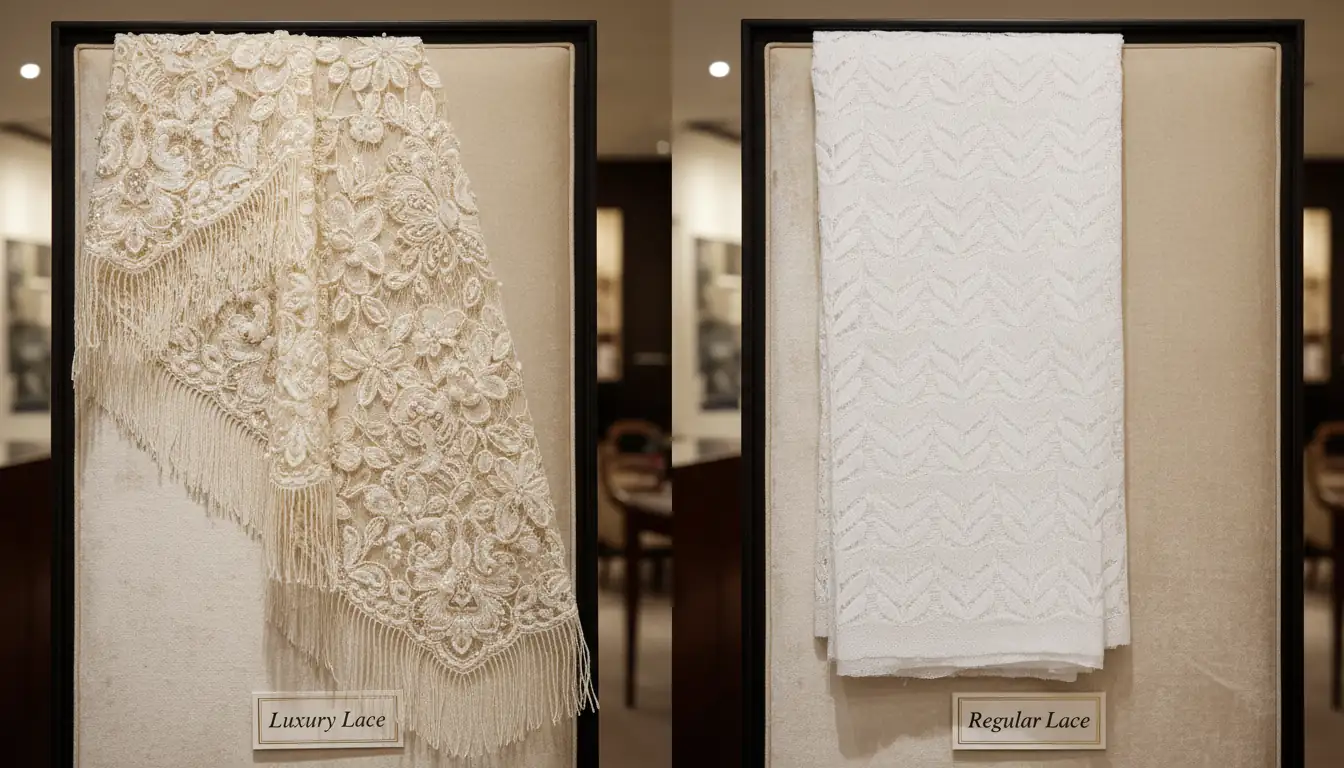
Luxury Lace vs Regular Lace
When it comes to sourcing lace fabrics, understanding the differences between luxury lace and regular lace is crucial for procurement managers and fabric developers. Luxury lace often features higher quality raw materials, intricate designs, and superior manufacturing techniques that justify its premium pricing. In contrast, regular lace typically uses less expensive materials and simpler production methods. This guide will delve into the specific technical parameters that define each lace type, helping you make informed decisions in your supply chain operations.
Production Techniques
Production techniques for lace fabric vary significantly between luxury and regular lace. Here are the key differences:
Luxury Lace Production
- Manufactured using high-grade fibers such as silk, cotton, or blends.
- Often involves intricate embroidery or handwork, enhancing aesthetic value.
- Utilizes advanced machinery like Jacquard looms for detailed patterns.
Regular Lace Production
- Typically made from synthetic fibers or lower-grade cotton.
- Production is often automated and focuses on volume rather than detail.
- Utilizes traditional lace-making techniques with limited machine capabilities.
Raw Material Grades
The choice of raw materials significantly influences the quality and performance of lace fabrics.
Luxury Lace Materials
- Silk: Offers a soft texture and natural sheen, ideal for high-end fashion.
- High-quality Cotton: Provides durability while maintaining breathability.
- Blends: Combining fibers to enhance strength and appearance.
Regular Lace Materials
- Polyester: Commonly used for affordability, but lacks breathability.
- Lower-grade Cotton: Less durable and may not pass QC standards.
Quality Control Standards
Quality assurance is paramount in lace production. The following standards are relevant:
Luxury Lace QC Standards
- Meets ISO 9001 certification for quality management.
- Adheres to AATCC standards for colorfastness and durability.
- Extensive testing for tensile strength and GSM (grams per square meter).
Regular Lace QC Standards
- May not consistently meet international quality standards.
- Basic testing for fabric weight and pattern consistency.
Technical Specifications Comparison
| Specification | Luxury Lace | Regular Lace |
|---|---|---|
| Composition | Silk/Cotton Blends | Polyester/Cotton |
| GSM | 50-150 | 30-80 |
| Width | 42-60 inches | 30-54 inches |
Conclusion
In summary, the distinction between luxury lace and regular lace extends beyond mere aesthetics. It encompasses raw materials, production techniques, and quality control standards that directly impact the performance and sourcing decisions within the textile supply chain. For professionals in the industry, understanding these parameters is essential for making informed procurement choices.
FAQ
What is the Sample Lead Time for Luxury Lace?
Sample lead time typically ranges from 2-4 weeks, depending on the complexity and availability of the design.
What is the Minimum Order Quantity (MOQ) for Wholesale Lace Fabric?
The MOQ for wholesale lace fabric is generally around 100-500 yards, varying by supplier and fabric type.
How do I ensure quality when sourcing lace fabrics?
Verify that the supplier adheres to international quality standards such as ISO and AATCC. Request samples for testing.
Call to Action
For high-quality lace fabric suitable for your next project, request a free sample swatch from Shaoxing Yituo today and experience the difference in quality and craftsmanship.
Explore more about lace fabrics and their applications in our guides: What Is Lace Fabric, Luxury Lace Fabric Trends, and How Lace Fabric Is Made.