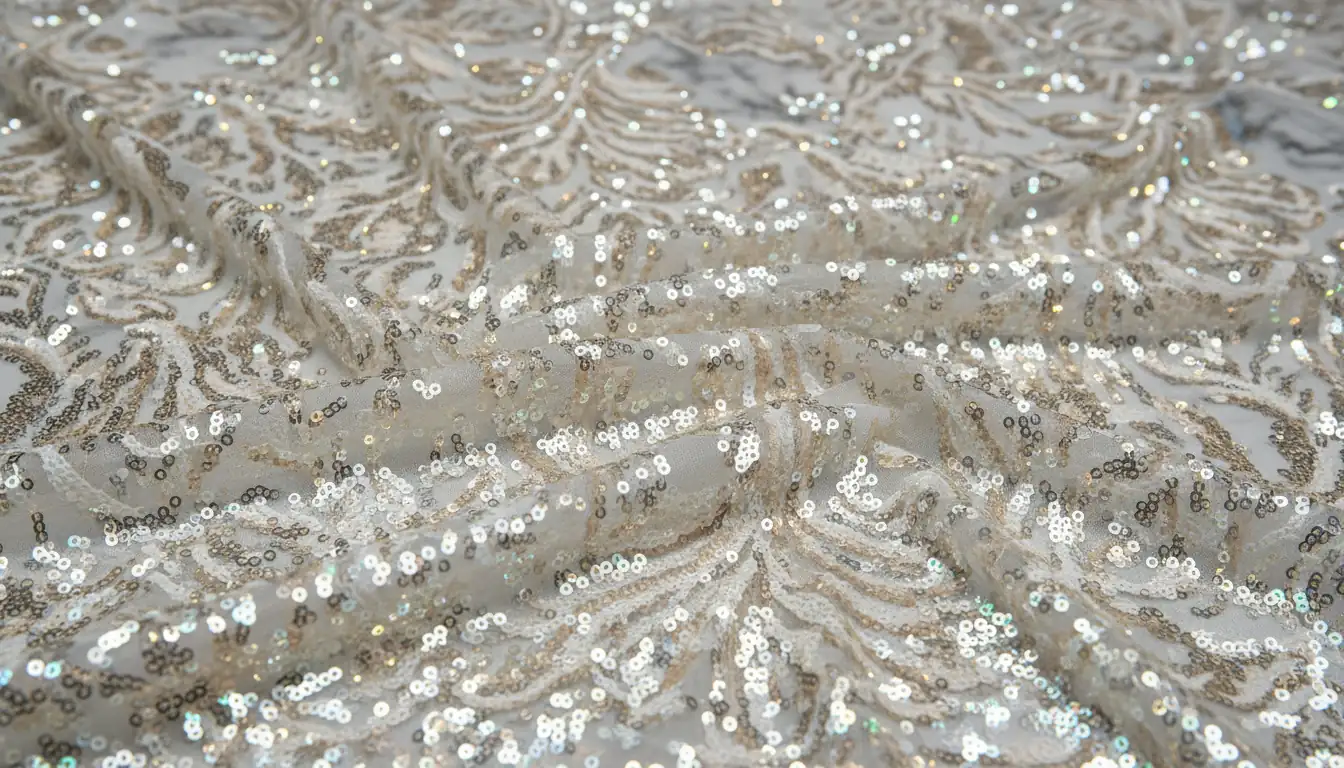
Sequin Lace vs Beaded Lace: A Comprehensive Guide for Textile Procurement
In the competitive landscape of textile procurement, understanding the differences between sequin lace and beaded lace fabric is crucial for informed sourcing decisions. Both types of lace add distinct aesthetic values to garments, but they differ significantly in terms of production techniques, material grades, and application. Key considerations for procurement managers include minimum order quantities (MOQ), lead times, and quality control standards. This guide will explore these differences to aid in your supply chain strategy.
Understanding Sequin Lace and Beaded Lace
Sequin lace is characterized by its incorporation of sequins, small reflective discs that enhance the fabric’s visual appeal. In contrast, beaded lace fabric features beads, which can vary in size, shape, and material, providing a more textured finish. Both types are commonly used in evening wear, bridal attire, and decorative elements.
Production Techniques
The production processes for sequin lace and beaded lace differ primarily in the embellishment phase:
- Sequin Lace: Typically produced using embroidery machines that apply sequins onto a lace base. The application techniques can vary, including direct stitching or heat bonding.
- Beaded Lace: Often involves manual or semi-automated beading processes. Beads are sewn onto the lace using specialized techniques to ensure durability and aesthetic quality.
Raw Material Grades
Both fabrics can be manufactured from various materials, including:
- Lace Cotton: A popular choice for both types due to its breathability and comfort.
- Polyester: Often used for sequins due to its durability and ability to hold color.
- Silk: A luxurious option, particularly for beaded lace, enhancing drape and sheen.
Quality Control Standards
Quality control is paramount to ensure that the final product meets industry standards:
- ISO 9001: Many lace fabric manufacturers adhere to this standard to ensure consistent quality in production processes.
- AATCC 16: This test assesses colorfastness to light, crucial for fabrics that will undergo exposure to sunlight.
- OEKO-TEX® Standard 100: Many manufacturers also certify their fabrics to ensure they are free from harmful substances.
Technical Specifications Comparison
| Specification | Sequin Lace | Beaded Lace |
|---|---|---|
| GSM (Grams per Square Meter) | 150-300 | 200-400 |
| Composition | Cotton/Polyester | Cotton/Silk/Polyester |
| Width | 45"-60" | 36"-54" |
Application and Use Cases
When choosing between sequin lace and beaded lace, consider the intended application:
- Sequin Lace: Ideal for high-impact designs where sparkle is a primary focus.
- Beaded Lace: Suited for intricate detailing and added texture, often preferred in bridal wear.
FAQ
What is the typical lead time for custom orders of sequin and beaded lace?
Lead times can vary, but expect approximately 4-6 weeks for production, depending on the complexity of the order.
What is the minimum order quantity (MOQ) for lace fabrics?
Typically, the MOQ ranges from 50 to 100 meters, depending on the manufacturer.
Are there specific quality checks for lace fabrics?
Yes, quality checks often include tensile strength testing, colorfastness assessments, and inspections for defects in the embellishments.
Can I request samples before placing a bulk order?
Yes, most manufacturers, including Shaoxing Yituo, provide sample swatches upon request to facilitate informed decision-making.
What distinguishes a high-quality lace fabric manufacturer?
A reliable lace fabric manufacturer should adhere to international quality standards, provide transparency in sourcing materials, and offer a range of customizable options.
For your sourcing needs, consider partnering with Shaoxing Yituo, a leading lace fabric manufacturer known for its commitment to quality and innovation. Explore our range of beaded lace fabric or learn more about lace fabrics. Request a free sample swatch today to experience our quality firsthand.