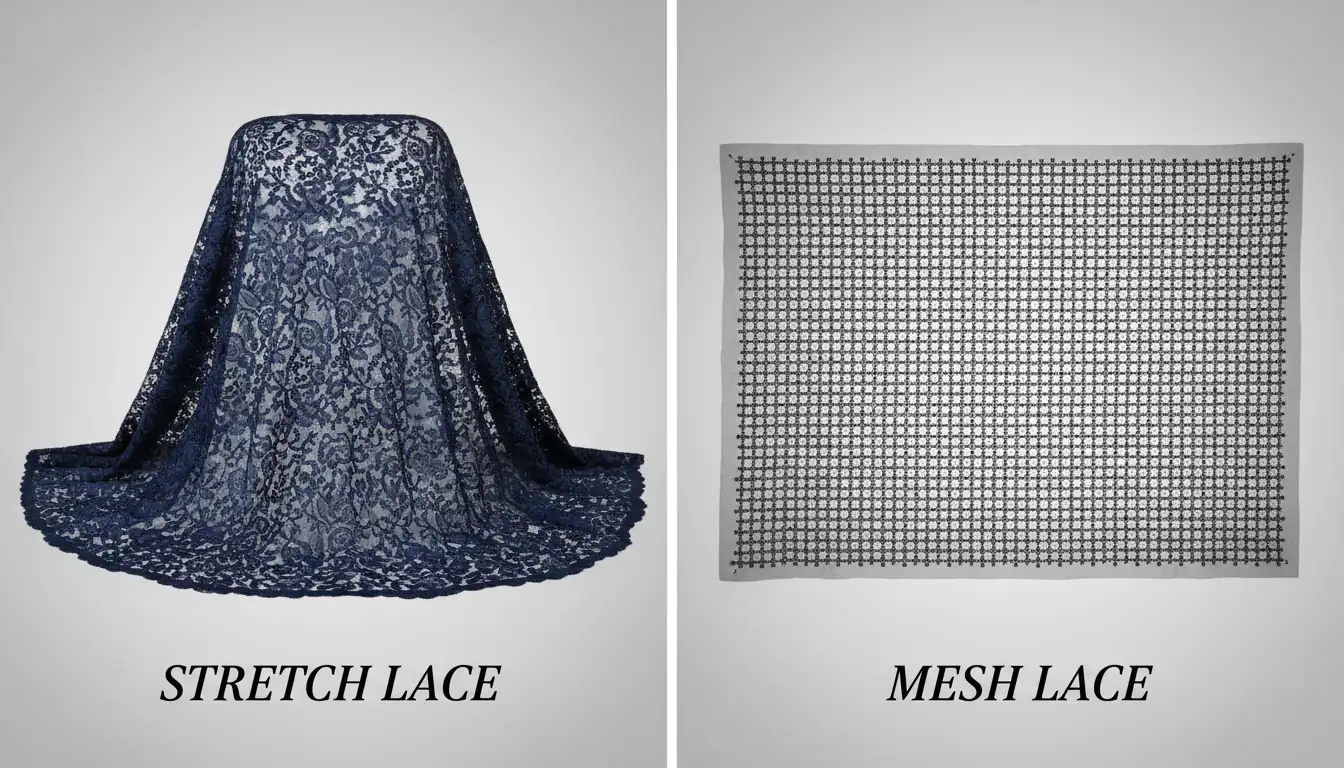
Stretch Lace vs Mesh Lace
When it comes to sourcing lace fabrics for industrial applications, understanding the differences between stretch lace and mesh lace is crucial for procurement managers and fabric developers. Each type offers unique properties that impact their use in various apparel lines. Stretch lace provides elasticity and comfort, making it ideal for form-fitting garments, while mesh lace is characterized by its breathable, lightweight structure, suitable for overlays and decorative applications. This article delves into the technical specifications, production methods, and supply chain considerations essential for B2B procurement.
Production Techniques
Both stretch lace and mesh lace are produced using distinct techniques that affect their properties and applications.
Stretch Lace Production
Stretch lace is typically manufactured using elastic threads combined with traditional lace-making techniques. Key aspects include:
- Machinery: Jacquard and Raschel knitting machines are commonly used.
- Raw Materials: Often made from a blend of nylon, polyester, and spandex for added elasticity.
- Quality Control: Adheres to standards such as ISO 9001 for consistent quality.
Mesh Lace Production
Mesh lace is crafted using open weave techniques that create a network of holes, enhancing breathability.
- Machinery: Typically produced on specialized mesh looms.
- Raw Materials: Commonly composed of polyester or cotton blends, which can vary in GSM (grams per square meter).
- Quality Control: Often tested against AATCC standards for colorfastness and durability.
Technical Specifications Comparison
Understanding the technical specifications of stretch lace and mesh lace is essential for making informed procurement decisions. Below is a comparative table highlighting key metrics:
| Specification | Stretch Lace | Mesh Lace |
|---|---|---|
| GSM | 150-300 GSM | 80-200 GSM |
| Composition | Polyester/Spandex Blend | Polyester/Cotton Blend |
| Width | 45-60 inches | 36-54 inches |
| Stretchability | High | Low |
| Applications | Undergarments, activewear | Overlays, decorative accents |
Quality Standards and Certifications
When sourcing either stretch or mesh lace, ensure compliance with industry standards:
- OEKO-TEX Standard 100: Certifies that the lace fabric is free from harmful substances.
- ISO 9001: Ensures quality management systems are in place for consistent production.
Supply Chain Considerations
Understanding the supply chain dynamics for both types of lace is essential for procurement managers:
- MOQ (Minimum Order Quantity): Often varies by manufacturer; discuss with your custom lace manufacturer.
- Lead Time: Typically ranges from 2 to 8 weeks depending on the factory's capacity and location.
- Wholesale Opportunities: Engage with suppliers for bulk purchasing options on wholesale lace fabric.
Frequently Asked Questions
What is the sample lead time for stretch and mesh laces?
Sample lead time generally ranges from 1 to 3 weeks depending on the manufacturer.
What is the Minimum Order Quantity (MOQ) for lace fabrics?
MOQ can vary significantly but typically starts at 100 meters for lace fabrics.
Can I customize designs for stretch lace?
Yes, many custom lace manufacturers offer design customization options.
Are there specific quality tests for lace fabrics?
Yes, common tests include tensile strength and colorfastness against AATCC standards.
What is the difference between lace ribbon and lace trim?
Lace ribbon is typically a wider strip of lace used for tying or decorative purposes, while lace trim is narrower and often used for finishing edges.
In conclusion, selecting the right type of lace fabric involves understanding the specific properties and technical characteristics that meet your garment's requirements. For your next project, consider reaching out to Shaoxing Yituo for high-quality lace options and request a free sample swatch to evaluate firsthand. Optimize your sourcing with a reliable lace fabric supplier today!