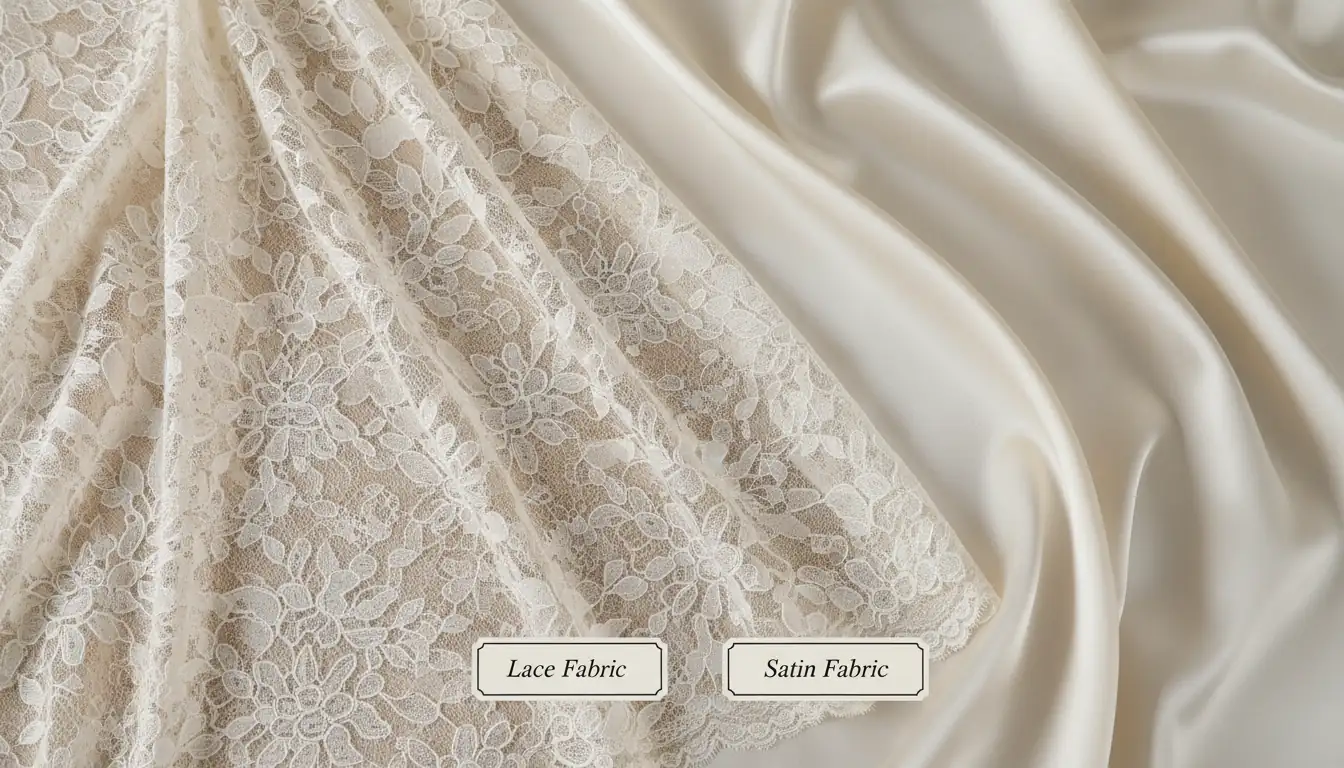
Lace Fabric vs Satin Fabric
When assessing fabric types for industrial applications, understanding the differences between lace fabric and satin fabric is crucial for procurement managers and fabric product developers. Lace, known for its intricate designs, is often used in specialized applications, while satin, with its smooth and glossy finish, is favored for its luxurious appeal. Each fabric has unique characteristics that impact sourcing, production, and quality control. This article delves into the production techniques, specifications, and supply chain considerations between these two fabrics.
Production Techniques
Lace Fabric Production
Lace fabric is produced through various techniques, primarily involving:
- Bobbin Lace: Created by intertwining threads around bobbins.
- Needle Lace: Made by stitching threads into a design.
- Knitted Lace: Developed using knitting techniques to create open patterns.
Each method requires specific machinery, such as lace-making machines capable of producing intricate designs. The raw materials commonly used include cotton, polyester, and nylon, which determine the final fabric's quality and characteristics.
Satin Fabric Production
Satin is constructed using a weaving technique that creates a smooth, glossy surface. Key aspects include:
- Weaving Method: Typically produced using a 4-end or 8-end satin weave.
- Raw Materials: Commonly made from silk, polyester, or nylon.
- Machine Requirements: Requires high-speed looms for efficient production.
Quality control in satin production focuses on achieving a consistent finish and ensuring tensile strength according to ISO standards.
Technical Specifications
| Fabric Type | Composition | Average GSM | Width | Applications |
|---|---|---|---|---|
| Lace Fabric | Cotton, Polyester, Nylon | 30-150 | 40"-60" | Bridal Wear, Costumes |
| Satin Fabric | Silk, Polyester, Nylon | 60-300 | 45"-60" | Evening Wear, Linings |
Quality Control Standards
Quality control for lace and satin fabrics adheres to international standards:
- OEKO-TEX Standard 100: Ensures fabrics are free from harmful substances.
- AATCC Test Methods: Assesses colorfastness, shrinkage, and tensile strength.
These standards are essential for maintaining consistency and reliability in the supply chain.
Supply Chain Considerations
When sourcing lace or satin fabrics, procurement managers must consider:
- Minimum Order Quantity (MOQ): Typically varies by supplier; lace may have a lower MOQ.
- Lead Time: Lace production may require longer lead times due to intricate designs.
- Supplier Reliability: Establishing relationships with a reputable lace trim supplier is critical.
Understanding these factors will aid in effective inventory management and cost control.
FAQs
What is the average lead time for lace fabric?
Lead times can range from 4-12 weeks depending on the complexity and order size.
What is the MOQ for satin fabric?
MOQs typically start at 100 meters for satin fabric, varying by supplier.
Can I request a sample of lace fabric?
Yes, requesting samples is encouraged to assess quality and suitability.
What distinguishes embroidered lace fabric?
Embroidered lace fabric features intricate designs stitched onto the base lace, enhancing its visual appeal.
How do I choose between lace and satin for my project?
Consider the end-use, desired aesthetics, and fabric properties when making your selection.
For high-quality lace and satin options, consider sourcing from established manufacturers. Request a Free Sample Swatch from Shaoxing Yituo to ensure your selection meets your standards. Additionally, explore more about how lace fabric is made or delve into the intricacies of embroidered lace fabric to enhance your understanding of these specialized textiles.