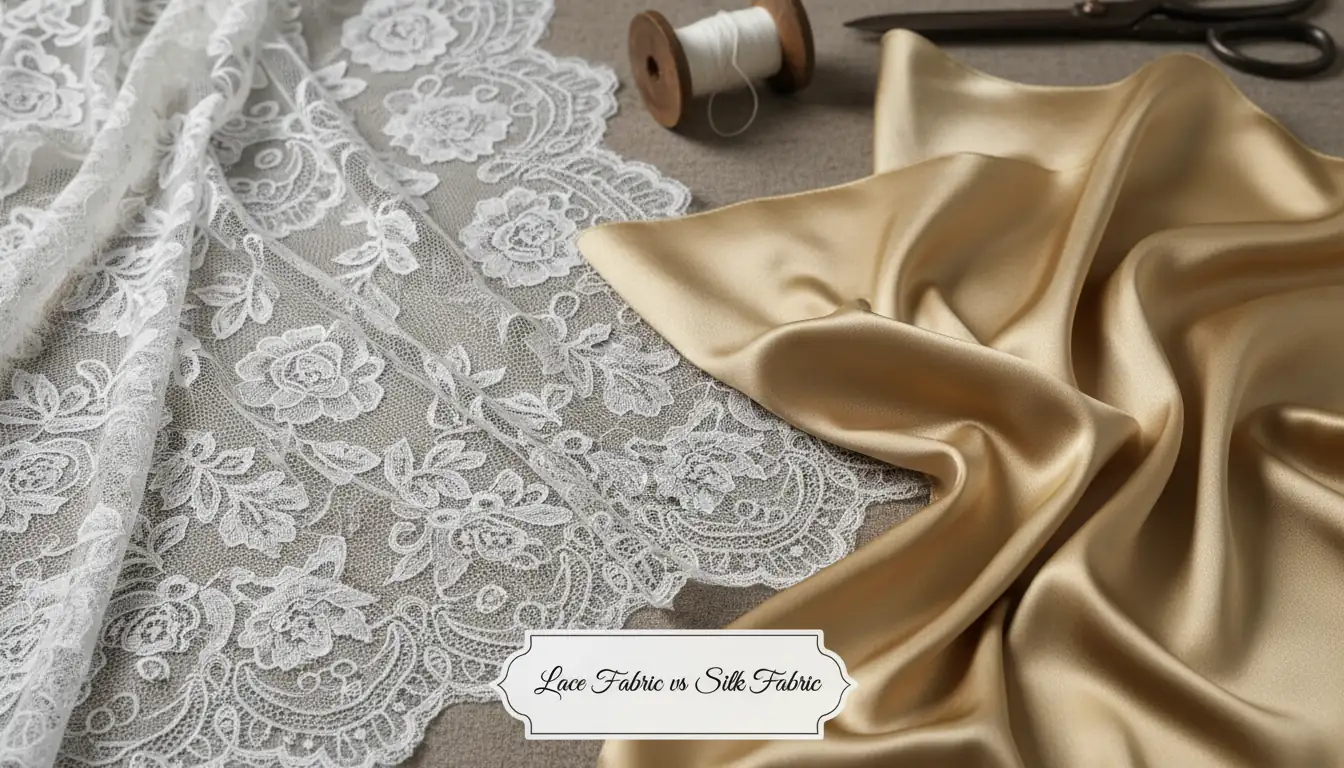
Lace Fabric vs Silk Fabric
When comparing lace fabric and silk fabric, it's essential for procurement managers and fabric developers to understand the distinct characteristics and applications of each material. Lace fabric, known for its intricate patterns and lightweight structure, is often utilized in high-fashion garments and delicate decorative items. Conversely, silk fabric offers a luxurious feel and a smooth texture, making it a staple in premium apparel. The choice between these two fabrics significantly impacts production techniques, costs, and end-use applications.
Production Techniques
Lace Fabric Production
Lace fabric is typically produced using specialized techniques such as:
- Leavers Lace: A traditional technique using lace machines that create intricate patterns.
- Raschel Lace: A more modern technique that utilizes warp knitting to produce a wide range of lace designs.
The choice of production technique affects the fabric's quality, cost, and lead time.
Silk Fabric Production
Silk fabric is primarily produced through the following processes:
- Sericulture: The cultivation of silkworms to produce silk threads.
- Weaving: The method of interlacing threads to create the final fabric.
Silk production is labor-intensive and generally results in higher pricing due to the raw material's quality and the complexity of the processing.
Raw Material Grades
Raw Materials for Lace Fabric
Lace fabrics are made from various raw materials including:
- Cotton: Offers durability and comfort.
- Polyester: Provides affordability and ease of care.
- Nylon: Adds stretch and resilience.
Raw Materials for Silk Fabric
Silk is produced from the cocoons of silkworms. The quality of silk is categorized into grades:
- Mulberry Silk: The highest quality, known for its softness and sheen.
- Tasar Silk: A wild silk with a coarser texture.
Quality Control Standards
Quality control is vital in both lace and silk fabric production. Standards include:
- ISO 9001: Ensures consistent quality management across processes.
- AATCC 61: Tests colorfastness and durability.
- OEKO-TEX Standard 100: Certifies that textiles are free from harmful substances.
Technical Specifications Comparison
| Specification | Lace Fabric | Silk Fabric |
|---|---|---|
| GSM (Grams Per Square Meter) | 50-150 | 60-120 |
| Composition | Cotton, Polyester, Nylon | 100% Silk |
| Width | 90-150 cm | 90-140 cm |
Conclusion
In summary, the choice between lace fabric and silk fabric hinges on various factors including production techniques, raw material grades, and quality control standards. Lace fabric is often preferred for its decorative qualities, while silk fabric is favored for its luxurious feel. Understanding these differences is crucial for making informed sourcing decisions in the textile supply chain.
FAQ
What is the typical MOQ for lace fabric orders?
Minimum Order Quantities (MOQ) for lace fabric typically range from 100 to 500 meters, depending on the manufacturer.
What is the sample lead time for silk fabric?
Sample lead time for silk fabric usually ranges from 7 to 14 days, depending on the complexity of the fabric design.
Can lace fabric be customized?
Yes, working with a custom lace manufacturer allows for tailored designs to meet specific project requirements.
What are the key differences between embroidered lace fabric and standard lace fabric?
Embroidered lace fabric features additional embroidery that enhances its aesthetic appeal, while standard lace is typically simpler in design.
Where can I find lace fabric wholesale?
For competitive pricing, sourcing lace fabric wholesale from reputable suppliers can lead to cost-effective procurement.
Get in Touch
For samples and more information, request a free sample swatch from Shaoxing Yituo today!